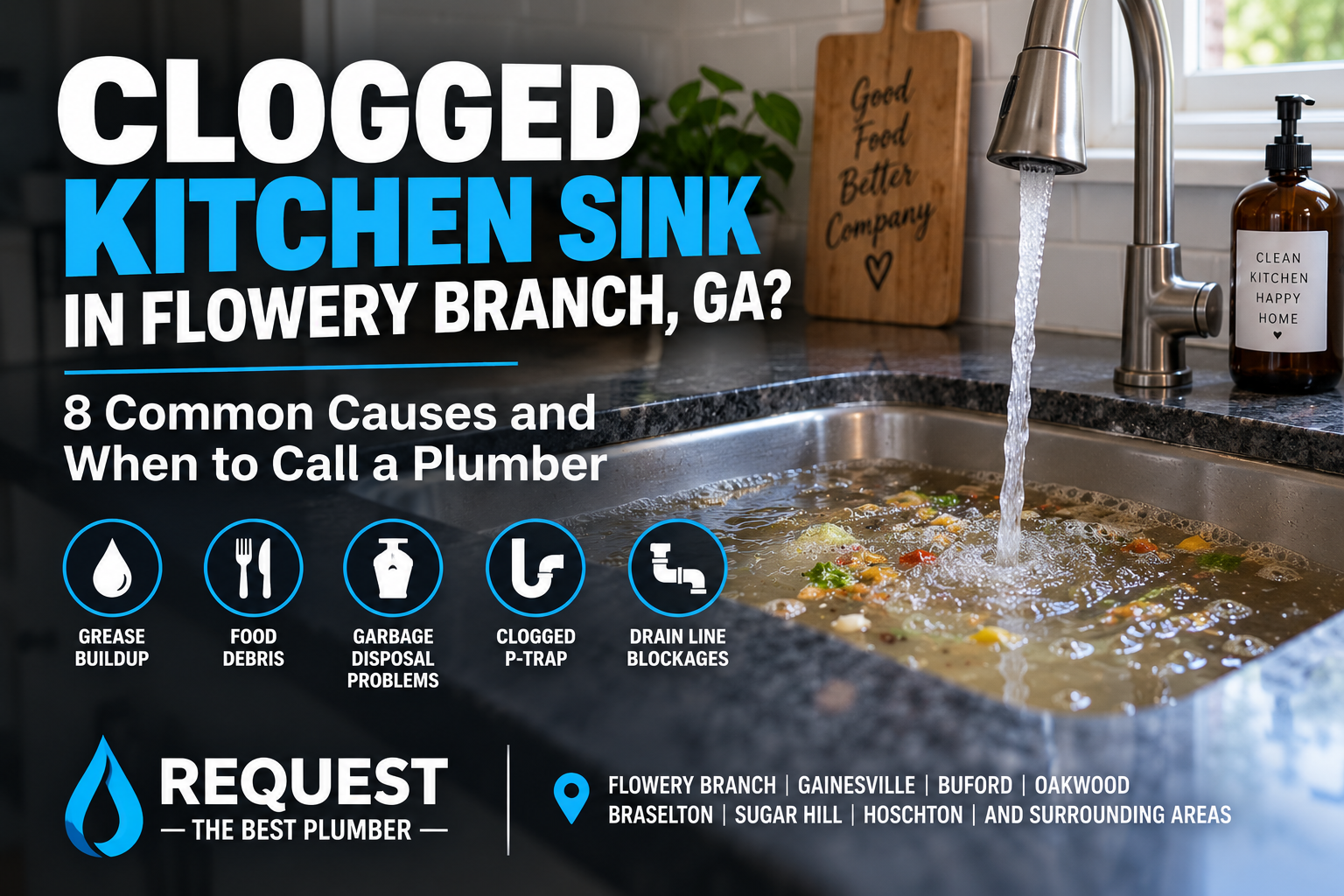
Clogged Kitchen Sink in Flowery Branch, GA? 8 Common Causes and When to Call a Plumber
A kitchen sink that drains slowly might not seem like a serious plumbing problem at first.
Then the water starts taking longer to disappear. Food begins collecting in the sink. Strange odors come from the drain. Eventually, the sink may stop draining completely or water may begin backing up into the opposite basin.
If you're dealing with a clogged kitchen sink in Flowery Branch, GA, understanding what causes kitchen drain problems can help you determine whether you're dealing with a simple obstruction or a larger plumbing issue.
Request The Best Plumber provides kitchen plumbing repair and drain cleaning in Flowery Branch, Gainesville, Buford, Oakwood, Braselton, Sugar Hill, Hoschton, and surrounding North Georgia communities.
Here are eight common causes of clogged kitchen sinks.
1. Grease and Cooking Oil Buildup
Grease is one of the biggest causes of kitchen drain problems.
Hot grease may appear to flow easily down the drain, but it begins cooling as it moves through your plumbing.
Over time, grease can stick to the interior walls of the drainpipe.
Additional debris then sticks to the greasy buildup, gradually reducing the amount of space available for water to pass through.
Common culprits include:
- Bacon grease
- Cooking oil
- Butter
- Fat from meat
- Sauces
- Gravy
Instead of pouring grease down the sink, allow it to cool and dispose of it appropriately.
2. Food Debris
Small pieces of food can accumulate inside kitchen drains over time.
Common foods that contribute to kitchen clogs include:
- Rice
- Pasta
- Coffee grounds
- Eggshells
- Potato peels
- Fibrous vegetables
- Flour
- Starchy foods
Some materials expand when exposed to water, while others combine with grease and create thicker deposits inside the drain.
Even homes with garbage disposals should avoid treating the disposal like a trash can.
3. Garbage Disposal Problems
Sometimes a clogged kitchen sink is connected to the garbage disposal.
A disposal may:
- Become jammed
- Stop spinning
- Become overloaded
- Develop buildup
- Fail mechanically
You may hear humming even though the blades aren't operating normally.
In other situations, the garbage disposal itself may work correctly while the drainpipe downstream is clogged.
A plumber can determine whether the issue is the disposal, drain line, or both.
4. A Clogged P-Trap
The curved pipe underneath your kitchen sink is called a P-trap.
Its shape holds a small amount of water to help prevent sewer gases from traveling back into the home.
Unfortunately, its shape also makes it a common location for debris to collect.
Grease, food particles, and other materials can accumulate inside the P-trap and restrict drainage.
When the obstruction is located there, professional cleaning may restore normal drainage.
5. The Clog Is Farther Down the Drain Line
Not every kitchen sink clog sits directly underneath the sink.
Sometimes the blockage is farther inside the plumbing system.
This is especially likely when:
- The sink keeps clogging after being cleared
- Both sides of a double sink back up
- Water drains extremely slowly
- Nearby fixtures make unusual noises
- Previous DIY drain treatments haven't worked
Professional drain cleaning equipment can reach obstructions that household plungers or basic drain tools cannot.
6. Soap and Detergent Residue
Soap residue may also contribute to buildup inside kitchen drains.
When soap mixes with:
- Grease
- Minerals
- Food particles
- Other debris
it can contribute to deposits on the interior of the pipe.
The opening gradually becomes narrower until homeowners begin noticing slower drainage.
7. Mineral Buildup
Homes with mineral-rich water can develop deposits inside plumbing fixtures and pipes.
Mineral buildup may not cause an immediate clog, but over time it can contribute to restricted water flow.
If buildup combines with grease and food debris, kitchen drainage problems can become more noticeable.
8. A Larger Sewer or Drain Problem
Sometimes the kitchen sink isn't actually the main problem.
If your kitchen drain is slow and you're also experiencing problems with:
- Toilets
- Showers
- Bathtubs
- Bathroom sinks
- Floor drains
there may be a blockage farther down the drainage or sewer system.
Multiple affected fixtures are an important clue.
In this situation, repeatedly trying to clear only the kitchen sink may not solve the underlying problem.
Signs Your Kitchen Drain Needs Professional Attention
Consider calling a plumber when you notice:
- Water isn't draining
- The sink repeatedly clogs
- Water backs up into the other sink basin
- The garbage disposal isn't working properly
- Strong odors continue coming from the drain
- Gurgling sounds occur
- Several drains are slow
- Water backs up into another fixture
Recurring clogs are particularly important.
If the same drain keeps becoming clogged, there may be buildup or an obstruction that has never been fully removed.
Should You Use Chemical Drain Cleaner?
Store-bought chemical drain cleaners can seem like an easy solution, but they don't necessarily remove the entire obstruction.
A temporarily opened path through the clog may allow water to drain for a short time while significant buildup remains on the inside of the pipe.
Certain products may also be inappropriate for particular plumbing materials or situations.
Professional drain cleaning allows the actual cause of the blockage to be evaluated.
How Professional Kitchen Drain Cleaning Works
The appropriate method depends on the location and severity of the obstruction.
A plumber may evaluate:
- The garbage disposal
- P-trap
- Drain connections
- Branch drain
- Main drainage system
Depending on what is found, professional equipment can be used to remove the obstruction and restore better drainage.
More severe or recurring drainage problems may require additional inspection.
How to Prevent Kitchen Sink Clogs
Homeowners can reduce the likelihood of kitchen drain problems by changing a few habits.
Avoid putting these materials down your kitchen sink:
- Grease
- Cooking oil
- Coffee grounds
- Large amounts of food
- Pasta
- Rice
- Eggshells
- Fibrous vegetables
Use sink strainers to catch food particles and clean them regularly.
Also pay attention when your sink begins draining slower than usual. Addressing buildup earlier can sometimes prevent a complete blockage.
Drain Cleaning in Flowery Branch, GA
A clogged kitchen sink can interfere with cooking, cleaning, dishwashing, and normal household routines.
Request The Best Plumber provides professional drain cleaning in Flowery Branch, GA, including service for:
- Clogged kitchen sinks
- Slow drains
- Garbage disposal problems
- Bathroom drain clogs
- Recurring drain blockages
- Sewer and drainage problems
We proudly serve Flowery Branch, Gainesville, Buford, Oakwood, Braselton, Sugar Hill, Hoschton, and surrounding North Georgia areas.
Need a Plumber in Flowery Branch, GA?
If your kitchen sink won't drain, continues clogging, smells bad, or backs up when you use the garbage disposal, it may be time to have the drain professionally inspected.
Contact Request The Best Plumber for professional kitchen plumbing repair and drain cleaning in Flowery Branch and surrounding North Georgia communities.
Call us now at tel:+14708132716 or request your free estimate online.