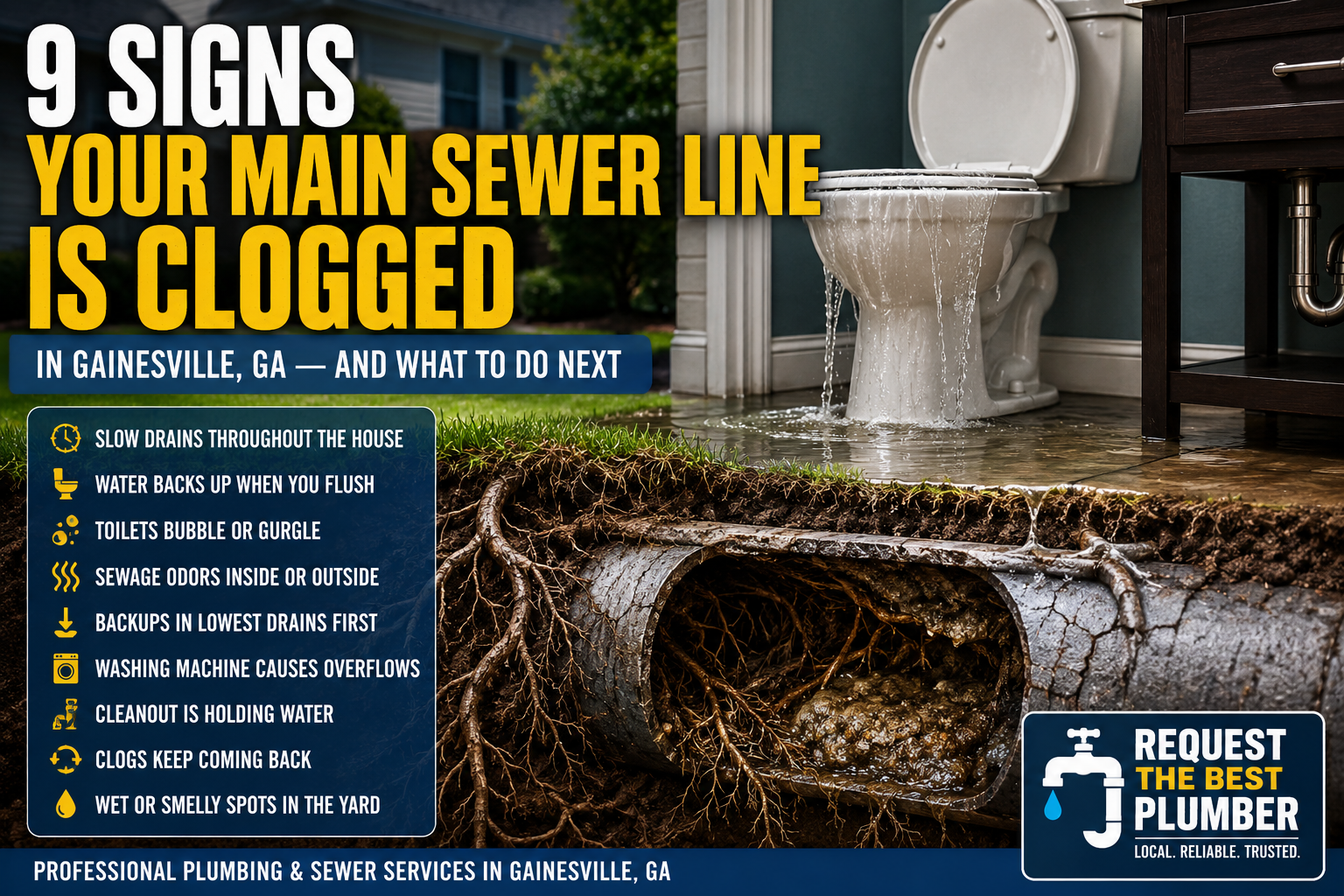
9 Signs Your Main Sewer Line Is Clogged in Gainesville, GA — And What to Do Next
A slow bathroom sink is annoying. A clogged main sewer line is a much bigger problem.
When the main sewer line leaving your home becomes partially or completely blocked, wastewater may no longer have a clear path to the municipal sewer system or septic system. Instead, water can begin draining slowly, backing up into lower fixtures, producing unpleasant odors, or creating strange noises throughout your plumbing system.
For homeowners in Gainesville, Georgia, recognizing the early warning signs of a sewer-line problem can help prevent a messy and potentially expensive plumbing emergency.
At Request The Best Plumber, we help Gainesville-area homeowners diagnose drain and sewer problems and determine the right solution based on what is actually happening inside the plumbing system.
Here are nine warning signs that your home's main sewer line may be clogged.
1. Several Drains Are Slow at the Same Time
One slow drain usually indicates a localized problem.
For example, hair and soap buildup may cause a bathroom sink or shower to drain slowly. Food debris and grease can cause problems in a kitchen drain.
But when several fixtures throughout your home suddenly begin draining slowly, the problem may be farther down the plumbing system.
You might notice:
- The kitchen sink drains slowly.
- A bathroom sink takes longer to empty.
- The shower begins pooling water around your feet.
- The toilet flushes more slowly than normal.
- A bathtub is slow to drain.
When multiple fixtures are affected at the same time, they may all be struggling to drain through the same partially blocked main sewer line.
This is an important distinction because repeatedly treating individual drains may not solve the underlying problem.
2. Water Backs Up Into a Tub or Shower When You Flush the Toilet
One of the strongest indicators of a main drain problem is water appearing in a fixture that you are not currently using.
For example, you flush an upstairs or downstairs toilet and notice water rising into the bathtub or shower.
Why does this happen? Wastewater leaving the toilet normally travels through your home's drain system and into the main sewer line. If that line is blocked, the wastewater must go somewhere. It may begin moving backward and emerge through one of the lowest available drains.
In many homes, that means a bathtub, shower, or floor drain.
If sewage or dirty water begins backing up into another fixture, stop using water whenever possible and contact a professional plumber.
Continued flushing, showering, running the washing machine, or using sinks can send even more water into the blocked system.
3. Your Toilet Bubbles or Gurgles
A toilet should generally remain quiet when it is not being used.
If you hear bubbling or gurgling from the toilet when someone uses another plumbing fixture, air may be getting trapped inside the drain system.
You might hear the toilet gurgle when:
- The washing machine drains.
- Someone takes a shower.
- The bathtub empties.
- A sink drains.
- Another toilet is flushed.
A plumbing system depends on properly flowing water and air. When a blockage interferes with that flow, trapped air can move back through the system and escape through the toilet bowl.
An occasional sound does not automatically mean your sewer line has failed, but repeated gurgling combined with slow drains or backups should be investigated.
4. You Notice Sewage Odors Inside or Outside Your Home
Your plumbing system is designed to keep sewer gases outside your living space.
If you begin noticing a persistent sewage odor, something may be wrong with the drainage or venting system.
Sewer odors can have several causes, including:
- A dry P-trap.
- A damaged toilet wax ring.
- Plumbing vent problems.
- A cracked drain or sewer pipe.
- A partially clogged sewer line.
- Wastewater sitting inside a blocked pipe.
If the odor appears together with slow drains, gurgling fixtures, or backups, a sewer-line obstruction becomes a stronger possibility.
Do not simply cover the smell with air fresheners. Plumbing odors often indicate a problem that should be identified at its source.
5. The Lowest Drain in Your Home Backs Up First
When the main sewer line becomes clogged, problems often appear first at the lowest plumbing fixture in the house.
Depending on your home's layout, this could be:
- A downstairs shower.
- A basement floor drain.
- A first-floor bathtub.
- A low toilet.
- A utility-room drain.
Imagine the main sewer pipe as the exit route for nearly every gallon of wastewater leaving your home.
If that exit becomes blocked, wastewater begins filling the drainage system from the blockage backward. The lowest opening may therefore be the first place where water becomes visible.
This is why a shower backup can sometimes indicate a problem much larger than a clogged shower drain.
6. Your Washing Machine Causes Another Drain to Overflow
Washing machines discharge a significant amount of water within a relatively short period.
A healthy drain system can normally handle that flow without difficulty. But a partially clogged main line may struggle.
You might run the washing machine and suddenly notice:
- A nearby toilet bubbling.
- A utility sink filling with water.
- Water appearing in a shower.
- A floor drain overflowing.
This can happen because the large volume of water from the washing machine reaches the restricted sewer line faster than the blockage allows it to pass.
If this happens more than once, avoid running additional large water loads until the drainage system is inspected.
7. Your Sewer Cleanout Is Holding Water
Many homes have a sewer cleanout that gives plumbers direct access to the main drain line.
It may look like a capped pipe located:
- Near the exterior foundation.
- In the yard.
- In a crawlspace.
- Near where the home's sewer line exits the structure.
A plumber can use the cleanout to inspect, clear, or camera the sewer line.
Standing wastewater near a cleanout or wastewater escaping from it can indicate that the line downstream is blocked.
Homeowners should use caution around sewer cleanouts. Removing a cap from a backed-up line can release sewage under pressure.
If you suspect the sewer line is full, professional evaluation is the safer option.
8. Sewer Problems Keep Coming Back
A drain that clogs once may simply need cleaning. A drain or sewer line that repeatedly clogs deserves additional investigation.
Recurring backups can sometimes be caused by:
- Grease buildup.
- Heavy debris accumulation.
- Tree-root intrusion.
- Pipe deterioration.
- Misaligned pipe sections.
- Bellied or sagging sewer pipes.
- Foreign objects in the line.
- A damaged or collapsed pipe.
Simply opening a temporary pathway through the blockage may restore drainage for a while without correcting the underlying condition.
That's where a sewer camera inspection can become useful. A plumbing camera allows a technician to see inside portions of the sewer line and look for conditions that would otherwise remain hidden underground.
9. Your Yard Has an Unusually Wet or Smelly Area
Not every sewer-line problem occurs inside the house.
A damaged underground sewer pipe may create symptoms outside, including:
- Soggy areas in the yard.
- Unusual sewage odors.
- Ground that remains wet despite dry weather.
- A particularly green patch of grass.
- Soil settling above the sewer-line path.
These signs do not automatically confirm a sewer leak because irrigation problems, groundwater, or water-line leaks can create similar symptoms.
However, outdoor symptoms combined with recurring indoor drainage problems are worth investigating.
What Causes Main Sewer Line Clogs?
Main sewer lines can become blocked for many reasons.
Grease and Debris Buildup
Cooking grease should never be poured down a drain. Although grease may enter the drain as a warm liquid, it can cool and cling to the inside of pipes. Over time, additional debris may stick to it and gradually restrict the line.
Flushable Wipes and Hygiene Products
A package may describe a wipe as "flushable," but that does not mean it breaks apart as quickly as toilet paper. Wipes and other products can contribute to serious blockages.
Items that generally should not be flushed include:
- Baby wipes.
- Cleaning wipes.
- Paper towels.
- Feminine hygiene products.
- Cotton swabs.
- Dental floss.
- Diapers.
The safest rule is simple: toilets are primarily designed for human waste and toilet paper.
Tree Roots
Tree roots naturally grow toward sources of moisture. If an underground sewer pipe develops a crack, loose connection, or opening, roots may enter the pipe. Once inside, they can continue growing and collect debris until water flow becomes severely restricted.
Aging or Damaged Pipes
Older sewer pipes can deteriorate over time. Depending on the type and condition of the pipe, problems may include corrosion, cracking, separation, shifting, or collapse.
Pipe Bellies
A sewer line should maintain the proper slope so wastewater can move with gravity. If part of the pipe sinks, a low area known as a belly can form. Wastewater and solids may collect inside the sagging section, increasing the likelihood of recurring blockages.
Is It a Clogged Drain or a Clogged Main Sewer Line?
This is one of the most common questions homeowners ask.
A local drain clog normally affects one fixture or one small area of the house. A main sewer-line blockage often affects several fixtures.
For example:
Likely individual drain problem: Your bathroom sink drains slowly, but every other fixture works normally.
Possible main-line problem: Two toilets gurgle, the downstairs shower backs up, and several sinks are draining slowly.
The pattern of symptoms often provides valuable information about where the restriction is located.
Can You Clear a Main Sewer Line Yourself?
Minor sink or shower clogs can sometimes be addressed safely by homeowners. A main sewer-line blockage is different.
Improper use of drain-cleaning equipment can damage plumbing, become stuck inside the pipe, or create an injury risk.
Chemical drain cleaners are also generally not an effective solution for serious main-line blockages and may introduce additional hazards.
If several plumbing fixtures are backing up, professional diagnosis is usually the better approach.
How Does a Plumber Diagnose a Clogged Sewer Line?
The exact process depends on the symptoms and plumbing layout. A plumber may:
- Ask which fixtures are affected.
- Determine when the problem started.
- Locate the home's main drain or sewer cleanout.
- Evaluate whether the blockage appears localized or system-wide.
- Use professional drain-cleaning equipment when appropriate.
- Perform a sewer camera inspection if recurring problems or pipe damage are suspected.
The goal should not simply be to make the water disappear. The goal is to understand why the blockage occurred and whether there is an underlying issue likely to cause another backup.
Sewer Camera Inspection in Gainesville, GA
A sewer camera can provide valuable information when a sewer problem repeatedly returns.
A specialized waterproof camera is inserted into the sewer line so the plumber can inspect accessible portions of the pipe.
It may reveal:
- Root intrusion.
- Heavy buildup.
- Cracks.
- Broken sections.
- Pipe separation.
- Foreign objects.
- Severe corrosion.
- Sagging sections.
- Collapsed pipe.
Camera inspections can be especially useful before recommending major sewer-line repairs because they provide visual information about the actual condition of the pipe.
When Is a Sewer Backup an Emergency?
Treat a backup seriously when sewage is entering your home.
Stop or minimize water use and contact a plumber if:
- Sewage is entering a bathtub or shower.
- Multiple toilets will not flush.
- Several drains suddenly stop working.
- Wastewater is coming through a floor drain.
- A sewer cleanout is overflowing.
- The problem is rapidly getting worse.
Every additional gallon of water used inside the home may add more wastewater to a drainage system that already cannot empty properly.
How to Help Prevent Future Sewer Clogs
Not every sewer problem is preventable, but good habits can reduce the likelihood of certain blockages.
Never pour grease down the drain
Allow grease to cool and dispose of it properly.
Be careful what you flush
Stick primarily to toilet paper and human waste.
Use sink strainers
Strainers can catch food particles, hair, and debris before they enter the plumbing system.
Address recurring clogs
If the same drain repeatedly backs up, investigate the reason rather than continually treating the symptom.
Consider a camera inspection for recurring main-line problems
Repeated sewer backups can indicate something more significant than ordinary debris.
Need Sewer Line or Drain Cleaning in Gainesville, GA?
Slow drains and sewer backups rarely improve by being ignored.
If multiple drains are slow, your toilets are gurgling, or wastewater is backing up into your Gainesville home, Request The Best Plumber can help identify the source of the problem and recommend the appropriate solution.
We serve homeowners throughout Gainesville, Buford, Flowery Branch, Oakwood, and surrounding North Georgia communities.
Whether you need professional drain cleaning, sewer-line troubleshooting, or a sewer camera inspection, getting the problem diagnosed early can help protect your home from a much larger mess.
Contact Request The Best Plumber today to schedule plumbing service in Gainesville, GA.
Frequently Asked Questions
What is the biggest sign that my main sewer line is clogged?
One of the strongest warning signs is multiple drains having problems at the same time, especially when using one fixture causes water or air to appear in another fixture.
Why does my toilet bubble when the shower drains?
A restriction in the drainage system may be trapping air and forcing it back through the toilet. If it happens repeatedly, particularly with slow drains, have the system inspected.
Can a clogged sewer line clear itself?
A significant main-line blockage should not be expected to reliably resolve on its own. Symptoms may temporarily improve as water slowly passes a partial obstruction, but the underlying restriction may remain.
Should I use chemical drain cleaner on a sewer-line clog?
Chemical drain cleaners are generally not an appropriate solution for serious main sewer-line problems. A plumber can determine the location and cause of the blockage and use suitable professional equipment.
Does a sewer camera clear a clogged pipe?
No. A sewer camera is primarily a diagnostic tool. It allows the plumber to inspect the inside of the sewer line. Separate equipment is typically used to clear a blockage.
Why does my sewer line keep clogging?
Recurring sewer clogs can be related to buildup, roots, damaged piping, improper slope, pipe deterioration, or other conditions. A camera inspection may help identify why the problem repeatedly returns.