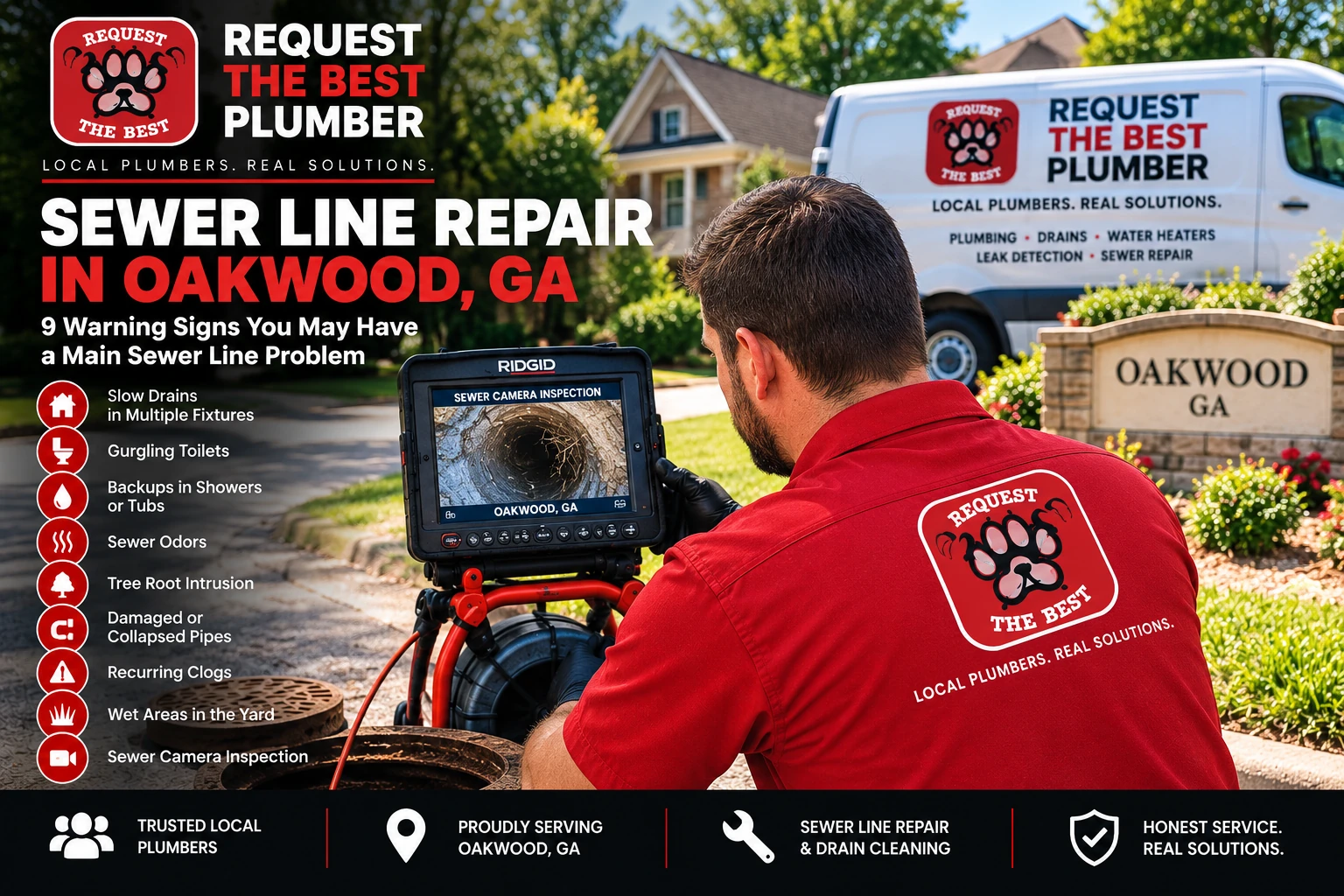
Sewer Line Repair in Oakwood, GA: 9 Warning Signs You May Have a Main Sewer Line Problem
A slow drain might seem like a minor plumbing problem. But when several drains in your home begin acting up at the same time, the problem may be much deeper than a clogged sink or shower.
Your home's main sewer line carries wastewater away from your toilets, sinks, showers, tubs, washing machine, and other plumbing fixtures. When that line becomes clogged, damaged, or collapsed, wastewater may no longer have a clear path out of your home.
For homeowners in Oakwood, GA, recognizing the warning signs of a sewer line problem early can help prevent sewage backups, property damage, and more extensive plumbing repairs.
At Request The Best Plumber, we help homeowners in Oakwood and surrounding North Georgia communities diagnose drain and sewer problems and determine the appropriate repair.
Here are nine warning signs that your home may have a main sewer line problem.
1. Multiple Drains Are Clogged at the Same Time
One clogged sink usually points to a localized blockage.
Several clogged fixtures are different.
If your kitchen sink, shower, bathtub, and toilets are all draining slowly, the blockage could be located in a larger drain or the main sewer line.
This is especially concerning when fixtures in different parts of the house begin experiencing problems around the same time.
Instead of repeatedly treating individual drains, a plumber can investigate whether the problems share a common cause.
2. Your Toilets Are Gurgling
A toilet should normally flush without bubbling or making unusual noises.
If you hear gurgling from a toilet—particularly when another fixture is being used—it may indicate trapped air in the drainage system.
For example, you might notice your toilet bubbling when:
- The washing machine drains
- Someone takes a shower
- A bathtub empties
- A nearby sink drains
- Another toilet is flushed
The sound alone doesn't prove that the main sewer line is damaged, but persistent gurgling combined with slow drains or backups deserves attention.
3. Water Backs Up Into a Shower or Bathtub
One of the more obvious signs of a serious drainage problem is wastewater appearing in a fixture where it doesn't belong.
You might flush a toilet and notice water coming into the bathtub.
Or the washing machine may drain and cause water to rise in a nearby shower.
Because tubs and showers are typically low points in a home's drainage system, they may be among the first places a sewer backup becomes visible.
If wastewater is backing up into your home, stop using unnecessary plumbing fixtures and contact a plumber.
4. You Smell Sewer Odors Inside or Outside Your Home
A properly functioning plumbing system is designed to keep sewer gases out of your living space.
Persistent sewer odors can indicate several possible problems, including:
- Dry plumbing traps
- Damaged drain piping
- Venting problems
- Failed toilet seals
- Sewer line blockages
- Cracked or damaged sewer piping
If the smell is strongest near drains, bathrooms, the basement, crawlspace, or outside near the sewer line route, a plumbing inspection may help determine the source.
Don't simply cover the odor with air fresheners. Sewer odors are a symptom worth investigating. For a closer look at common causes, see our guide on what causes a sewer smell in your house.
5. Your Drains Keep Clogging Again
A drain that clogs once may simply need to be cleared.
A drain that repeatedly clogs after being cleaned can indicate a larger problem.
Recurring blockages may be associated with buildup inside the piping, roots, damaged piping, improper slope, or a restriction farther down the drainage system.
This is one reason professional drain cleaning can be valuable.
Clearing the immediate blockage may restore drainage temporarily without addressing why the clog keeps returning.
6. There Are Unusually Wet or Green Areas in Your Yard
Some sewer line problems show up outside rather than inside the home.
If an underground sewer pipe is leaking, you may notice:
- Unexplained wet areas
- Soft or muddy soil
- Unusual depressions
- Persistent sewage odors
- Grass growing differently in one area
Of course, wet soil can have many causes, especially after heavy rain.
But an unexplained wet area located near the path of your sewer line—particularly when combined with indoor drainage problems—should be investigated.
7. Your Drains Have Become Noticeably Slower
A slow drain doesn't automatically mean you need sewer line repair.
Hair, soap, grease, food debris, and other material can create localized drain clogs.
The pattern matters.
If one sink drains slowly, the issue may be isolated to that fixture.
If drains throughout the house have gradually become slower, there could be a restriction deeper in the drainage system.
Pay attention to whether the problem is spreading or getting progressively worse.
8. Sewage Is Backing Up Into Your Home
A sewage backup should be treated differently from an ordinary slow drain.
Wastewater can contain bacteria and other contaminants, and a significant backup can damage flooring, drywall, cabinets, furniture, and personal belongings.
If sewage begins entering the home:
- Stop using toilets, showers, sinks, washing machines, and dishwashers when possible.
- Keep children and pets away from contaminated areas.
- Avoid unnecessary contact with wastewater.
- Contact a professional plumber as soon as possible.
The priority is identifying why the system can no longer drain properly.
9. You've Had Repeated Sewer Problems With No Clear Explanation
If your Oakwood home has needed repeated drain cleaning but the problem keeps returning, additional diagnosis may be necessary.
One useful diagnostic tool is a sewer camera inspection.
A specialized camera can be inserted into accessible sewer piping to help a plumber inspect conditions inside the line.
Depending on the situation, an inspection may reveal:
- Heavy buildup
- Foreign objects
- Root intrusion
- Cracks
- Pipe separation
- Bellied or sagging sections
- Damaged piping
- Collapsed sections
The goal is to understand the problem before deciding on the repair. We recently used this approach to find a collapsed sewer pipe under a driveway in Buford.
What Causes Main Sewer Line Problems?
There isn't one universal cause.
Sewer lines can develop problems because of age, installation conditions, soil movement, roots, buildup, damage, or objects that should never have entered the drainage system.
Grease and Buildup
Cooking grease can stick to the inside of drain piping and collect additional debris over time.
Even when grease is poured down a drain as a liquid, it can cool and accumulate farther down the plumbing system.
Tree Roots
Roots naturally grow toward sources of moisture.
If roots gain access through an opening or damaged area of underground piping, they can create increasingly severe restrictions.
Damaged or Collapsed Pipe
Underground pipes can deteriorate or become damaged.
Depending on the piping material and conditions surrounding it, a sewer line may crack, separate, sag, or collapse.
Items Flushed Down Toilets
Toilets are designed primarily for human waste and toilet paper.
Wipes, paper towels, feminine hygiene products, and other materials can contribute to drain and sewer blockages.
Even products marketed as "flushable" may not break apart in the same way as toilet paper.
Drain Cleaning vs. Sewer Line Repair
Not every sewer blockage means the pipe needs to be replaced.
Sometimes the sewer line itself is structurally sound but obstructed.
In those situations, professional drain cleaning may restore flow.
If the pipe is physically damaged, however, simply clearing the blockage may not provide a lasting solution.
That is why diagnosis matters.
A professional plumber can evaluate the symptoms and determine whether the appropriate next step is drain cleaning, a sewer camera inspection, sewer line repair, or another solution.
Can a Sewer Camera Inspection Help?
Yes, particularly when a problem is recurring or the condition of the sewer line is unknown.
A camera inspection gives the plumber a view inside accessible portions of the line instead of relying entirely on symptoms.
That information can help identify where a problem is located and what may be causing it.
Should You Use Chemical Drain Cleaner?
Chemical drain cleaners are not a universal solution for recurring sewer problems.
Even if a chemical temporarily improves a slow drain, it doesn't repair a broken pipe, remove roots, correct a collapsed line, or solve many other main sewer line problems.
Repeatedly pouring chemicals into the drain can also complicate the situation.
When several fixtures are affected, professional diagnosis is usually a better next step than repeatedly treating individual drains.
How Can Oakwood Homeowners Help Prevent Sewer Problems?
You can't prevent every plumbing failure, but good habits can reduce unnecessary stress on your drainage system.
Avoid putting grease, cooking oil, wipes, paper towels, feminine hygiene products, and other inappropriate materials down drains and toilets.
Pay attention to changes in drainage speed and don't ignore recurring clogs.
Most importantly, look at the plumbing system as a whole.
One slow sink may be a sink problem.
Three slow drains, a gurgling toilet, and water appearing in a shower are much stronger indications that something farther downstream needs attention.
Frequently Asked Questions About Sewer Lines in Oakwood, GA
How do I know if my main sewer line is clogged?
Common warning signs include several slow drains, toilets that gurgle, water backing up into tubs or showers, recurring clogs, and sewer odors. A professional inspection may be needed to determine the exact cause.
Does a clogged sewer line always need to be replaced?
No. Some sewer lines are simply obstructed and can potentially be cleared. Replacement or repair may be necessary when the pipe itself is damaged.
Can a plumber see inside my sewer line?
A sewer camera can often be used to inspect accessible portions of the line and look for blockages, damage, roots, or other problems.
Why does my toilet bubble when my shower drains?
Bubbling can occur when air isn't moving normally through the drainage system. A blockage or other drainage issue is one possible cause.
Is a sewer backup an emergency?
A significant sewage backup deserves prompt attention because continued plumbing use may cause additional wastewater to enter the home and contaminated water can create sanitation concerns.
Need Sewer Line Service in Oakwood, GA?
If you're dealing with recurring drain clogs, gurgling toilets, sewer odors, slow drains, or wastewater backing up into your home, don't keep guessing at the cause.
Request The Best Plumber provides professional plumbing and sewer services for homeowners in Oakwood, GA and surrounding North Georgia communities.
We can evaluate the symptoms, identify the source of the problem, and explain your repair options.
Contact Request The Best Plumber today to schedule plumbing service in Oakwood, GA.