10 Signs You May Have a Slab Leak in Buford, GA — And What to Do About It
A plumbing leak under your home can be easy to miss.
Unlike a dripping faucet or leaking toilet, a slab leak can develop underneath the concrete foundation of a home, where the damaged pipe is completely hidden from view.
That means a homeowner may notice the effects of the leak long before they ever see the actual source.
Unusually high water bills, warm flooring, unexplained moisture, low water pressure, or the sound of running water can all be potential warning signs.
For homeowners in Buford, Georgia, catching a possible slab leak early can help limit water waste and reduce the risk of damage spreading into flooring, walls, cabinets, and other parts of the home.
At Request The Best Plumber, we help homeowners identify hidden plumbing problems and determine the most appropriate next step.
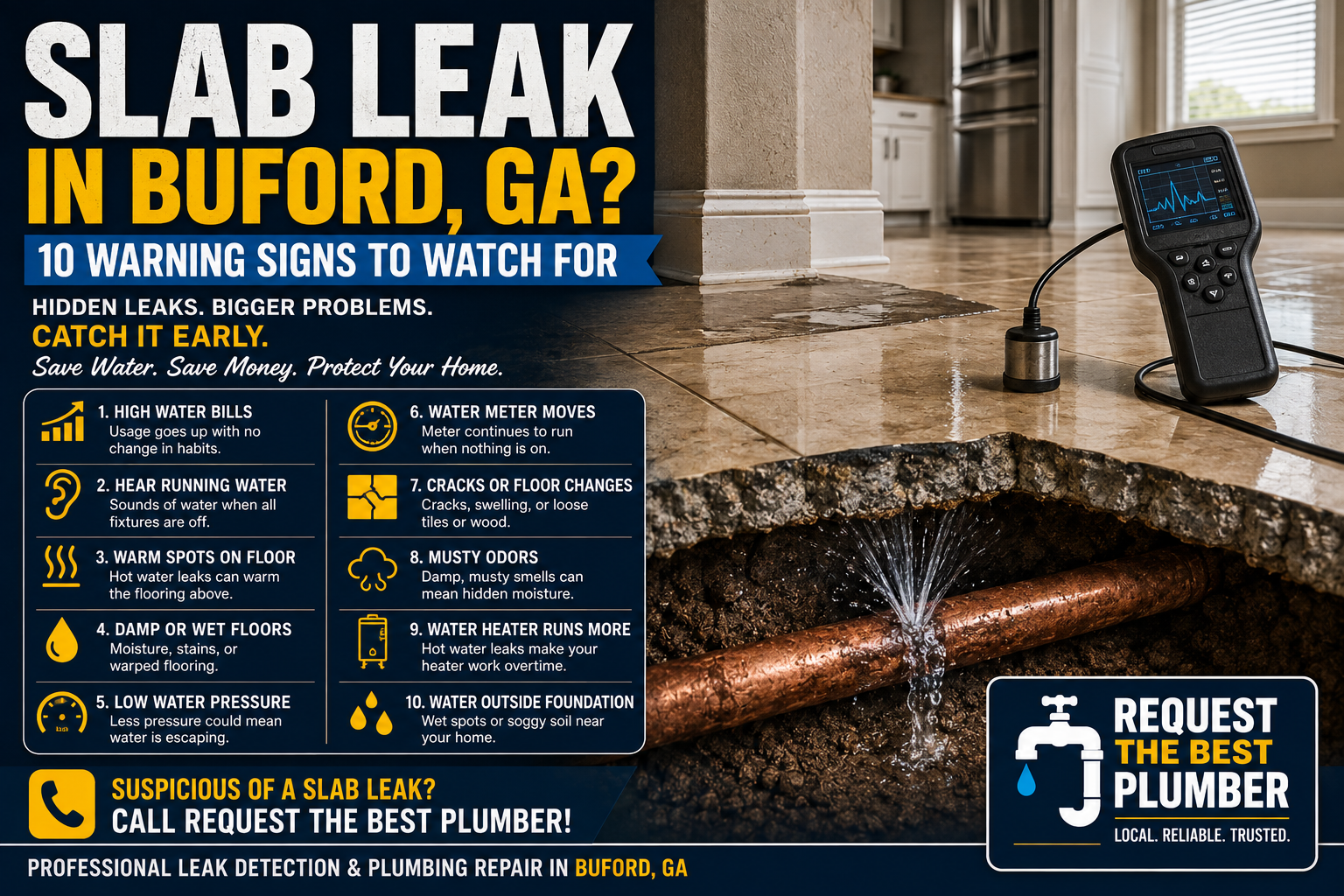
Here are 10 signs that may indicate a slab leak beneath your home.
What Is a Slab Leak?
Many homes are built on a concrete slab foundation.
Plumbing supply lines may run underneath or through portions of that foundation.
A slab leak occurs when one of those water lines begins leaking beneath the concrete.
Because the pipe is hidden, the leak may continue for some time before becoming obvious.
Slab leaks can involve:
- Hot-water lines
- Cold-water lines
- Copper piping
- Other water-supply piping installed beneath the foundation
The location and severity of the leak can vary significantly from one home to another.
1. Your Water Bill Suddenly Increases
One of the first signs of a hidden water leak may appear on your monthly utility bill.
If your normal water use has stayed about the same but your bill suddenly jumps, water may be escaping somewhere in the plumbing system.
Possible causes include:
- A running toilet
- A dripping faucet
- An irrigation leak
- A leaking water heater
- An underground service-line leak
- A slab leak
A higher water bill does not automatically mean the problem is under the foundation.
However, if you cannot find any visible leak that explains the increase, further investigation may be worthwhile.
2. You Hear Water Running When Everything Is Off
A home should generally become quiet when no plumbing fixtures or water-using appliances are operating.
If you hear what sounds like water flowing, hissing, or spraying even though nobody is using water, there may be a hidden leak.
Try turning off:
- Faucets
- Showers
- Dishwashers
- Washing machines
- Ice makers
- Irrigation systems
Then listen carefully.
If the sound continues, contact a plumber to investigate.
Do not assume the noise is harmless, especially if you are also experiencing high water bills or unexplained moisture.
3. Part of Your Floor Feels Warm
A warm spot on the floor can sometimes point to a leaking hot-water line underneath the slab.
You might notice one section of tile, hardwood, laminate, or another flooring material feels noticeably warmer than surrounding areas.
This can happen when hot water escapes from a damaged pipe beneath the foundation and transfers heat through the concrete.
Warm flooring can have other causes, including sunlight or HVAC-related conditions.
But a persistent warm spot with no obvious explanation can be an important clue.
This is especially true if the water heater appears to be running more frequently than normal.
4. You Notice Damp or Wet Flooring
A hidden leak may eventually allow moisture to migrate upward.
Homeowners may notice:
- Damp carpet
- Darkened flooring
- Warped wood
- Loose flooring
- Moisture near baseboards
- Staining
- Unexplained wet spots
If water repeatedly appears without a visible plumbing fixture nearby, do not ignore it.
Moisture under flooring can spread beyond the original leak location, meaning the wet area you see may not be directly above the damaged pipe.
Professional leak detection may be necessary to narrow down the source.
5. Your Water Pressure Is Lower Than Normal
If a pressurized water line is leaking continuously, some of the water intended for your faucets and fixtures may be escaping before it reaches them.
This can sometimes lead to lower water pressure.
You might notice:
- A weaker shower
- Faucets that no longer flow as strongly
- Reduced pressure when multiple fixtures are used
- A noticeable change throughout the house
Low water pressure has many possible causes, including:
- Pressure-regulator problems
- Mineral buildup
- Closed valves
- Municipal supply issues
- Plumbing restrictions
- Hidden water leaks
If low pressure appears suddenly, especially along with high water usage, a hidden leak should be considered.
6. Your Water Meter Keeps Moving
Your home's water meter can provide an important clue.
First, make sure all water-using fixtures and appliances are turned off.
Then check the meter.
If the meter continues registering water movement when nothing should be using water, there may be a leak somewhere in the system.
Keep in mind that automatic systems can complicate this test.
Examples include:
- Irrigation systems
- Ice makers
- Water-treatment equipment
- Automatic pool fillers
A plumber can help interpret unexplained meter activity and isolate possible leak locations.
7. You See Cracks, Swelling, or Changes in Flooring
Water beneath a home can sometimes contribute to changes in flooring materials.
You may notice:
- Buckling
- Warping
- Swelling
- Loose flooring
- Discoloration
- Separated flooring seams
These signs do not automatically prove a slab leak.
Flooring can be damaged by humidity, spills, roof leaks, appliance leaks, or other moisture sources.
However, flooring damage with no visible source should be investigated.
8. You Smell a Musty or Damp Odor
Water trapped beneath flooring or inside building materials can create a persistent damp smell.
You may notice a musty odor near:
- Baseboards
- Cabinets
- Carpeted areas
- Closets
- Interior walls
- Flooring transitions
If cleaning does not eliminate the smell, moisture may be present somewhere you cannot see.
A hidden plumbing leak is one possible cause.
9. Your Water Heater Seems to Run Constantly
A hot-water slab leak can force your water heater to work much harder.
If hot water is continually escaping beneath the slab, the water heater may keep heating replacement water.
Warning signs may include:
- The water heater running more frequently
- Higher gas or electric bills
- Hot water running out faster than expected
- Warm flooring
- Increased water usage
A continuously operating water heater has several possible causes, but combined symptoms may point toward a hot-water leak.
10. You Notice Water Near the Foundation
Sometimes a slab leak may produce visible moisture around the perimeter of a home.
Look for:
- Wet soil
- Persistent puddles
- Moisture near the foundation
- Unusually green patches of landscaping
- Water appearing despite dry weather
An exterior wet area can also be caused by:
- Irrigation leaks
- Drainage problems
- Rainwater
- Underground service-line leaks
The important point is that unexplained water around the foundation should not be ignored.
What Causes Slab Leaks?
Slab leaks can develop for several reasons.
Aging Plumbing
Pipes naturally deteriorate over time.
Older plumbing systems may be more vulnerable to:
- Corrosion
- Pinholes
- Weak joints
- Deteriorated fittings
Age alone does not mean a pipe is failing, but older plumbing may deserve closer attention when unexplained leaks occur.
Corrosion
Certain plumbing materials can corrode depending on:
- Water chemistry
- Pipe age
- Installation conditions
- Contact with surrounding materials
Corrosion can gradually weaken the pipe wall until a small leak develops.
Pipe Movement
Plumbing expands and contracts as hot and cold water moves through it.
Over many years, movement and friction can sometimes contribute to wear.
High Water Pressure
Excessive water pressure can place extra stress on:
- Pipes
- Valves
- Faucets
- Supply lines
- Appliances
- Plumbing fittings
If the pressure inside a home is significantly higher than appropriate, it can contribute to premature plumbing failures.
Improper Installation
Installation problems can also contribute to pipe damage.
Examples may include:
- Pipes rubbing against hard surfaces
- Poorly made connections
- Damaged pipe during construction
- Improper support
Problems may not become obvious until years after the home is built.
Are Slab Leaks Dangerous?
The biggest concern with a slab leak is usually the damage caused by uncontrolled water.
Potential consequences can include:
- Flooring damage
- Cabinet damage
- Drywall damage
- Increased water bills
- Mold or moisture-related problems
- Damage to personal belongings
- Constant water waste
Foundation-related concerns depend on the specific location, amount of leaking water, soil conditions, and how long the problem has been occurring.
That is why early diagnosis matters.
How Do Plumbers Find Slab Leaks?
In many situations, a plumber does not need to immediately tear open a floor just to determine whether a leak exists.
Professional leak detection can use multiple diagnostic methods depending on the situation.
A plumber may begin by:
- Reviewing water-bill changes
- Checking the water meter
- Testing water pressure
- Inspecting visible plumbing
- Isolating portions of the plumbing system
- Listening for unusual water movement
- Evaluating hot and cold water lines
Specialized equipment may also be used to help narrow down the likely leak location.
The exact method depends on the home's plumbing system and symptoms.
Can You Find a Slab Leak Without Breaking the Floor?
Often, the goal of leak detection is to locate the problem as accurately as possible before invasive work begins.
The actual repair method depends on:
- Leak location
- Pipe condition
- Accessibility
- Plumbing material
- Number of leaks
- Overall condition of the plumbing system
Professional diagnosis can help determine whether a localized repair makes sense or whether another solution should be considered.
How Are Slab Leaks Repaired?
There is no single repair method that is right for every home.
Possible approaches may include:
Direct Repair
The plumber may access the damaged section and repair or replace the affected pipe.
This can require accessing the area through the floor depending on the pipe location.
Rerouting the Water Line
In some situations, a plumber may bypass the leaking underground section and reroute plumbing through a more accessible location.
Whether this is practical depends on the home's construction and plumbing layout.
Partial or Whole-Home Repiping
If the slab leak is part of a larger pattern of deteriorating plumbing, additional pipe replacement may be worth considering.
Repeated leaks in multiple locations may indicate that continually repairing individual failures is no longer the best long-term strategy.
A professional plumber can explain the available options after determining what is actually happening.
Should You Ignore a Small Slab Leak?
No plumbing leak should be ignored simply because it appears small.
Even a relatively small leak can continue:
- 24 hours a day
- Seven days a week
- Until it is repaired
Over time, that can mean substantial water waste.
The moisture may also spread beyond the immediate leak location.
A leak that is inexpensive to address early can potentially become a much larger repair if surrounding materials are allowed to remain wet.
How Quickly Should You Call a Plumber?
Contact a plumber promptly if you notice multiple warning signs such as:
- Increasing water bills
- A moving water meter
- Warm flooring
- Unexplained wet spots
- Running-water sounds
- Low water pressure
- Water around the foundation
If water is actively entering the home or causing visible damage, treat the situation with greater urgency.
If necessary, turn off the home's water supply until a plumber can evaluate the problem.
Slab Leak vs. Main Water Line Leak
These two problems can sometimes create similar symptoms.
A slab leak generally involves a water line beneath the home's concrete foundation.
A main water line leak often involves the service line that carries water from the meter or municipal connection toward the house.
Both may cause:
- High water bills
- Low pressure
- Wet areas
- Meter movement
If you are unsure which type of leak may be affecting your home, our guide on main water line problems explains additional warning signs specific to service-line leaks.
Professional diagnosis can help determine which section of the plumbing system is leaking.
How to Help Prevent Future Plumbing Leaks
Not every hidden leak can be prevented.
However, homeowners can reduce some risks by paying attention to their plumbing system.
Monitor your water bill
A sudden unexplained increase may be your first warning.
Know your normal water pressure
Excessive pressure can stress plumbing components.
Repair leaks early
Small problems rarely improve on their own.
Watch older plumbing systems
If your home has experienced several leaks, discuss the overall condition of the piping with your plumber.
Know where the main shutoff is
During a major leak, shutting off the water quickly can help reduce damage.
Frequently Asked Questions About Slab Leaks
How do I know if I have a slab leak?
Common warning signs include unusually high water bills, running-water sounds, warm flooring, damp flooring, lower water pressure, and a water meter that moves when everything is turned off.
Will a slab leak always make the floor wet?
No. Some slab leaks may produce other symptoms before visible moisture appears.
Can a slab leak cause a high water bill?
Yes. A leaking pressurized water line may continuously waste water, resulting in higher usage.
Why is one area of my floor warm?
A warm spot may indicate a hot-water pipe beneath the slab is leaking, although other heat sources should also be considered.
Can a slab leak reduce water pressure?
Potentially. If a substantial amount of water is escaping from a damaged supply line, water pressure may be affected.
Does a slab leak mean I need to repipe my house?
Not necessarily. One isolated leak may be repairable. Multiple leaks or widespread pipe deterioration may make repiping worth discussing.
How serious is a slab leak?
The seriousness depends on the leak size, location, how long it has been occurring, and whether water has damaged surrounding materials. Prompt diagnosis is recommended.
Need Slab Leak Detection in Buford, GA?
If your water bill suddenly increased, your floor feels unusually warm, or you hear water running when every fixture is turned off, you may have a hidden plumbing leak.
Request The Best Plumber provides professional plumbing service for homeowners throughout Buford, Gainesville, Flowery Branch, Oakwood, and surrounding North Georgia communities.
We can evaluate suspicious plumbing symptoms, identify potential hidden water leaks, and help determine the most appropriate repair option for your home.
Do not wait for a hidden leak to become visible water damage.
Contact Request The Best Plumber today for slab leak and plumbing leak detection in Buford, GA.