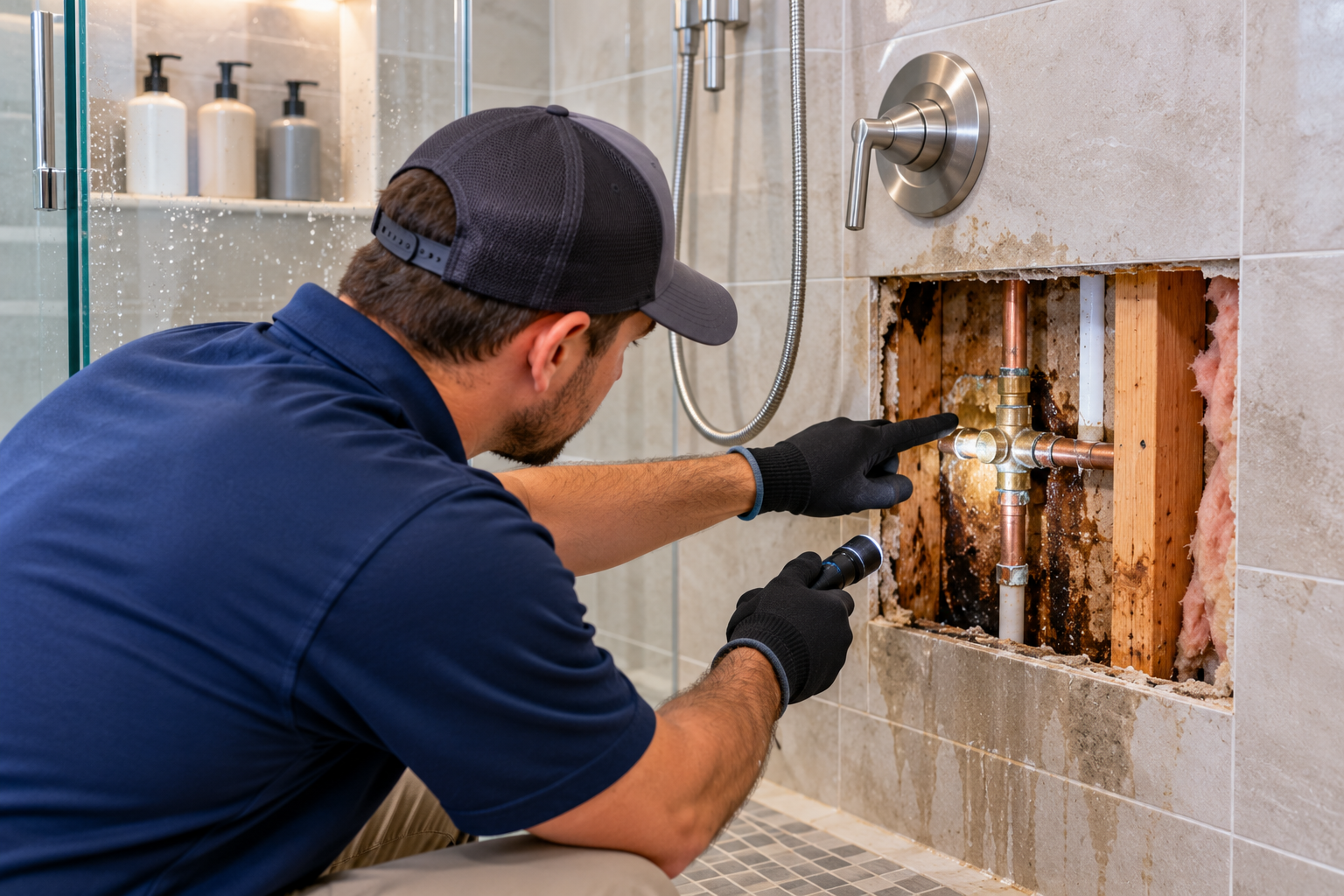
Shower Leaking Behind the Wall? 8 Warning Signs for Sugar Hill, GA Homeowners
A shower leak isn't always obvious.
While a dripping showerhead or leaking faucet is easy to notice, water escaping behind shower walls can remain hidden until significant damage develops.
For homeowners in Sugar Hill, Georgia, recognizing the warning signs early can help prevent damage to drywall, flooring, framing, and nearby rooms.
At **Request The Best Plumber**, we want homeowners to understand what hidden shower leaks look like and when professional leak detection may be necessary.
Here are eight warning signs that water could be leaking behind your shower wall.
1. Water Stains on the Wall or Ceiling
One of the most noticeable signs of a hidden shower leak is discoloration on nearby surfaces.
You might notice:
- Brown or yellow ceiling stains
- Dark patches on drywall
- Water marks near the shower
- Damp spots in an adjoining room
If the bathroom is upstairs, a leak may first appear on the ceiling below (see our ceiling water stain guide).
Water can travel along framing before becoming visible, so the stain may not be directly below the leak.
2. Paint Is Peeling or Bubbling
Moisture behind drywall can cause paint to bubble, blister, or peel.
If this happens near a shower, hidden moisture may be responsible.
However, poor ventilation and condensation can produce similar symptoms.
A professional inspection can help distinguish between plumbing leaks and general humidity problems.
3. You Notice a Persistent Musty Smell
A musty odor that doesn't disappear after cleaning may indicate moisture trapped behind walls or beneath flooring.
Hidden leaks can create damp conditions that support microbial growth.
Don't ignore persistent odors, especially when accompanied by staining or soft building materials.
4. Tiles Are Loose or Grout Is Cracking
Loose shower tiles, deteriorating grout, or failed caulking can allow water to reach areas behind the visible surface.
However, tile and grout are not the shower's primary waterproofing system.
Properly constructed showers rely on waterproofing materials behind or beneath the tile.
When waterproofing fails, water can damage the wall assembly even if the plumbing pipes are intact.
5. Your Water Bill Suddenly Increases
A leaking pressurized water supply pipe can waste water continuously.
If your water bill rises without a corresponding increase in usage, a hidden plumbing leak may be responsible (why is my water bill so high?).
Not all shower leaks increase water bills. Leaks from waterproofing failures or drains may occur only when the shower is used.
This distinction can help a plumber narrow down the cause.
6. Water Appears Outside the Shower
Do you notice water collecting along the bathroom floor after showering?
Possible causes include:
- Failed shower door seals
- Improperly directed shower spray
- Damaged caulking
- Leaking shower pans
- Drain connection problems
- Plumbing leaks behind the wall
A professional inspection can identify where the water is coming from.
7. The Wall Feels Soft or Damp
Drywall, baseboards, and trim exposed to repeated moisture may become soft, swollen, or damaged.
Pay attention to walls adjoining the shower, especially in closets or bedrooms.
If the wall feels damp even when the shower hasn't been used recently, further investigation may be needed.
8. You Hear Water Running When Everything Is Off
If you hear water moving behind the wall when no fixtures are operating, a pressurized supply line may be leaking.
Other plumbing equipment can sometimes make similar sounds, so the noise alone doesn't confirm a leak.
If you suspect a supply leak, turn off the affected water supply if possible and contact a plumber.
What Causes a Shower to Leak Behind the Wall?
Several different problems can create hidden shower leaks.
Leaking Shower Valve
The shower valve controls water flow and temperature.
A damaged valve body or leaking connection (often fixed with a shower valve replacement) may allow water to escape into the wall cavity.
Damaged Water Supply Pipes
Corroded pipes, failed fittings, or damaged connections can cause leaks.
Some supply leaks occur continuously because the pipes remain pressurized.
Shower Drain Problems
A loose or damaged drain connection can allow water to escape beneath the shower.
These leaks may occur primarily while the shower is being used.
Failed Waterproofing
Damaged shower pans or failed waterproofing membranes can allow water to reach the structure behind or beneath the shower.
Repair may require more than replacing grout or caulk.
How Do Plumbers Find Hidden Shower Leaks?
Depending on the symptoms, a plumber may use several diagnostic methods.
These can include:
- Visual inspection
- Moisture measurements
- Water pressure testing
- Controlled fixture testing
- Inspection of accessible plumbing connections
- Limited access openings when necessary
The goal is to identify the actual source of the leak before recommending repairs.
Can You Fix a Shower Leak Without Removing Tile?
Sometimes.
If the problem involves an accessible valve component, fitting, or supply connection, repairs may be possible through an existing access panel or an opening on the opposite side of the wall.
However, failed waterproofing or extensive concealed damage may require removing tile or other materials.
The correct repair depends on the source and extent of the problem.
Frequently Asked Questions
How do I know if my shower is leaking behind the wall?
Common warning signs include water stains, damp drywall, musty odors, peeling paint, loose tile, and unexplained water usage.
Can a shower leak cause mold?
Yes. Persistent moisture can create conditions that support mold growth.
Is a leaking shower an emergency?
A small leak may not require immediate emergency service, but an active leak causing significant water damage should be addressed promptly.
Will homeowners insurance cover a shower leak?
Coverage depends on the policy and cause of damage. Sudden accidental water damage may be treated differently from gradual deterioration or maintenance-related problems. Contact your insurer for specific coverage information.
Should I keep using my shower if I suspect a leak?
It's generally safer to stop using the affected shower until the source is identified, particularly when water is damaging surrounding surfaces.
Professional Shower Leak Detection in Sugar Hill, GA
Hidden shower leaks can become more expensive the longer they continue.
If you're noticing water stains, damp walls, musty odors, or unexplained moisture near your shower, don't wait for the damage to spread.
**Request The Best Plumber** helps homeowners address plumbing leaks and determine appropriate repair options.
We serve **Sugar Hill, Buford, Gainesville, Flowery Branch, Oakwood, Braselton, and surrounding North Georgia communities**.
**Contact Request The Best Plumber to schedule a plumbing leak inspection in Sugar Hill, GA.**
Call (470) 813-2716 to schedule shower leak detection today.